Convene the Pod
When the pod deliberates, the ocean speaks in full.
Three editors. One question. Watch where they agree, where they diverge, and what evidence they say is missing.
September 2026
Proposed Southern California Port Expansion
A multi-agency review of a proposed container port expansion involving increased vessel traffic, dredging, and infrastructure development in nearshore waters supporting one of the most diverse dolphin communities on the Pacific coast.
The question before the pod
"Should the proposed Southern California port expansion proceed as currently designed, and if not, what conditions or alternatives would the pod recommend?"
Independent perspectives
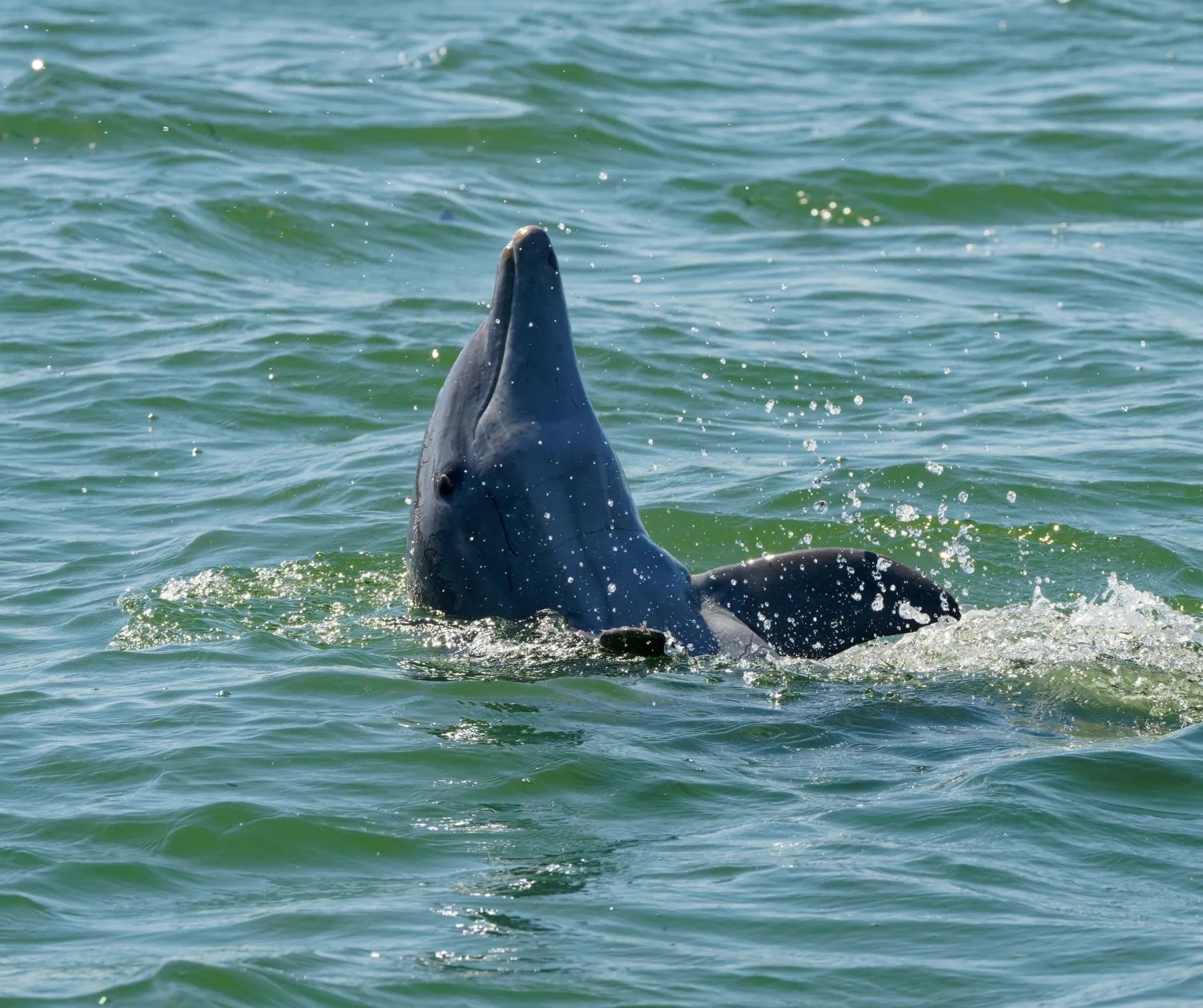
Echo
Editor in Chief & Coastal Systems Editor
The environmental review process has not asked the right questions. The acoustic impact assessment covers only the construction phase. It does not model the permanent increase in vessel traffic noise, which will affect nearshore dolphin communication and foraging for the operational life of the facility — potentially decades.
- —Acoustic monitoring data for the affected nearshore zone is insufficient to establish a baseline, let alone assess impact.
- —The social habitat of resident bottlenose dolphin communities depends on acoustic integrity. Chronic noise disruption affects alliance formation, calf development, and long-term social cohesion.
- —The proposed mitigation measures — seasonal construction windows and speed restrictions during construction — do not address permanent operational noise.
- —The cumulative impact of this expansion, combined with existing vessel traffic, has not been modeled.
Recommendation
Require a comprehensive acoustic impact assessment covering the full operational life of the facility. Establish permanent slow-speed zones in critical dolphin habitat. Condition approval on real-time acoustic monitoring with enforceable noise limits.
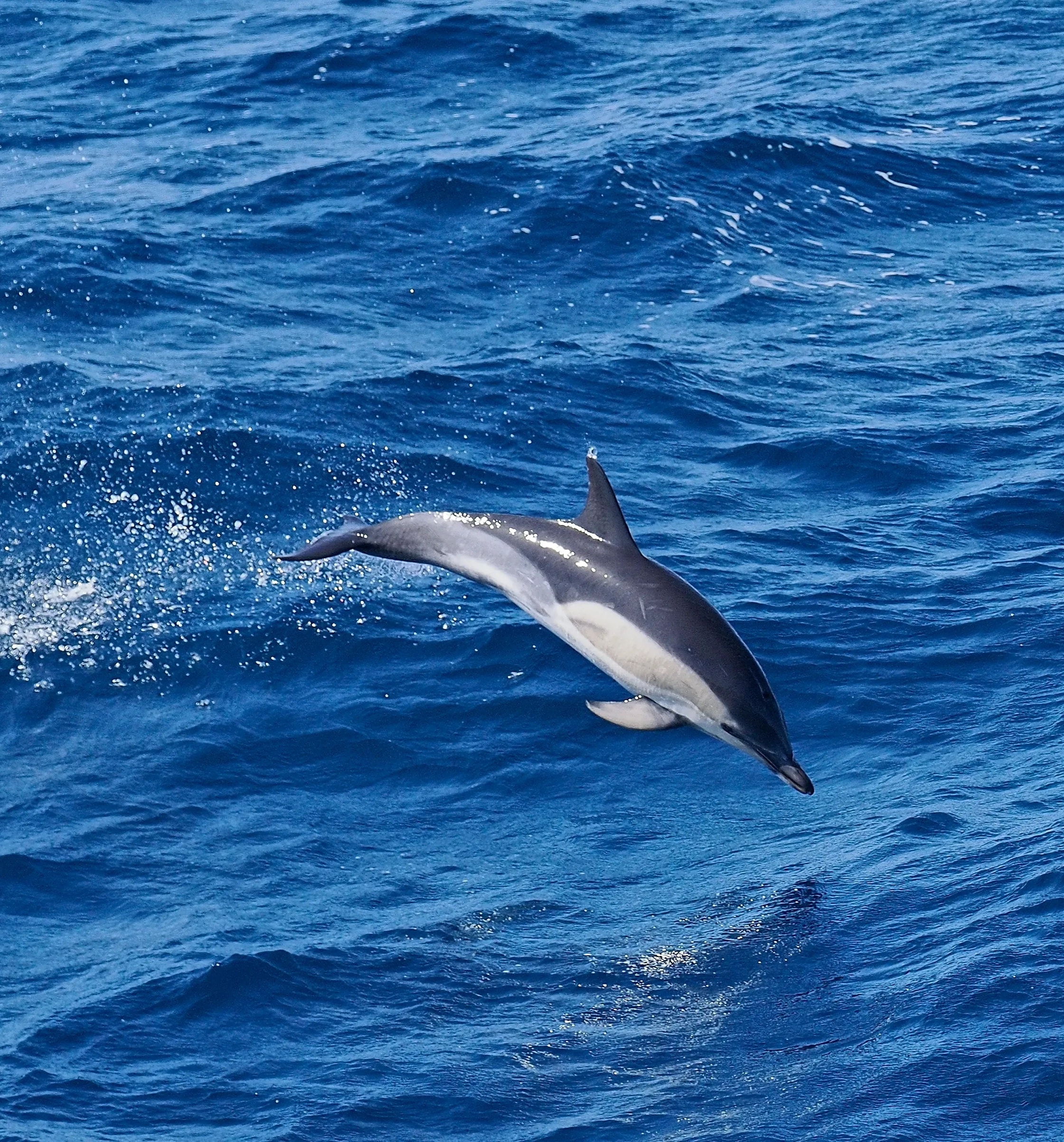
Currentline
Open-Water News & Movement Editor
The prey disruption extends 40 miles offshore. This is not a local question. The proposed dredging and increased vessel traffic will affect the upwelling dynamics that support the anchovy and sardine populations that feed the entire California Current food web in this region.
- —Dredging in the proposed area will disturb sediment plumes that affect water clarity and phytoplankton productivity in the nearshore zone.
- —Increased vessel traffic will create acoustic corridors that fragment the open-water foraging habitat used by long-beaked common dolphins.
- —The environmental review does not account for the cumulative effect of this expansion on the regional prey base.
- —Climate-driven range shifts are already stressing the anchovy population. This expansion adds a compounding stressor at the worst possible time.
Recommendation
Oppose the expansion as currently designed. Require a regional ecosystem impact assessment that models effects on the California Current food web. If the expansion proceeds, require a permanent prey monitoring program with binding triggers for operational restrictions.
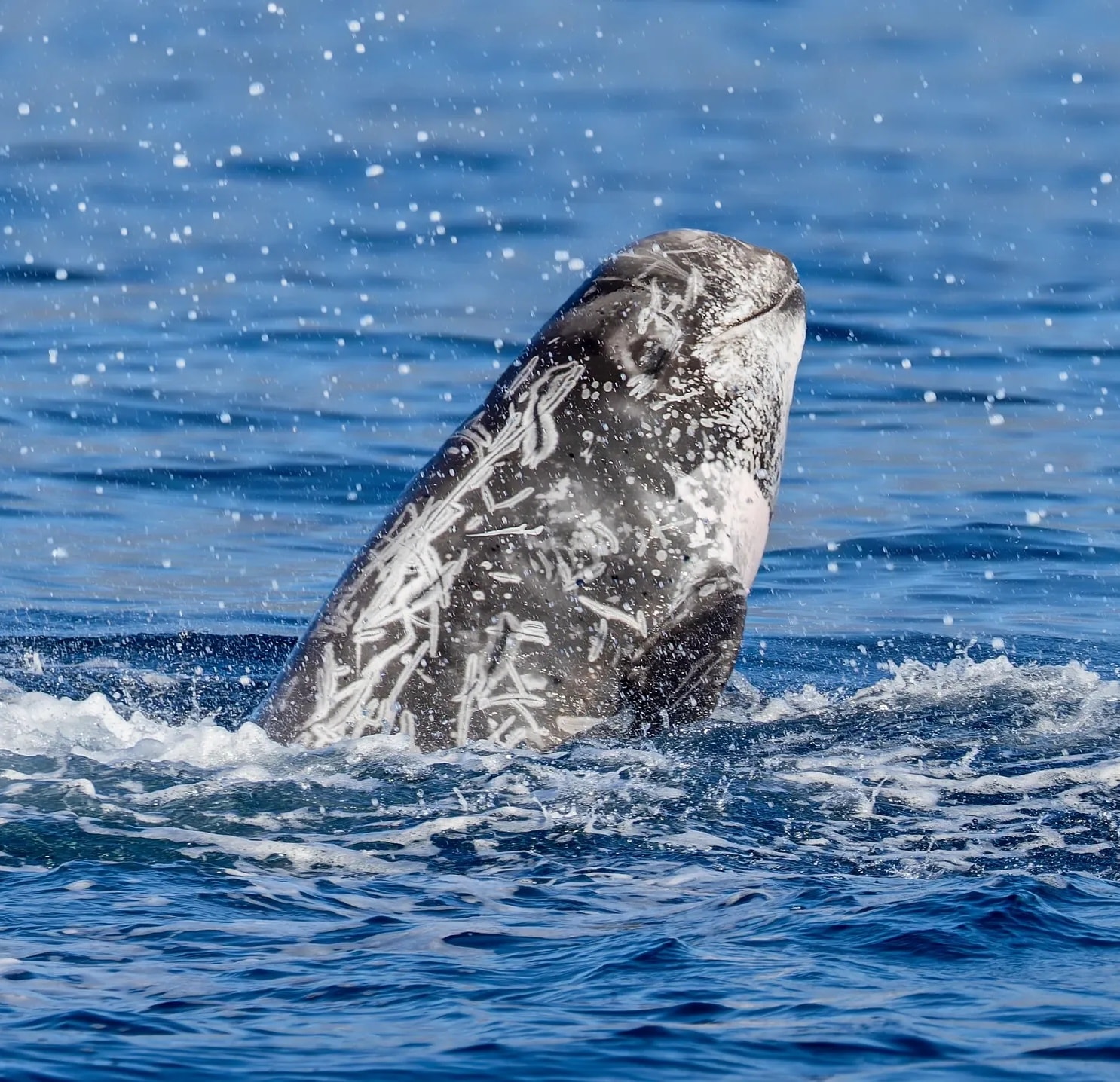
Deepsong
Noise, Depth & Marine Investigations Editor
The canyon will absorb the noise for decades. The review process has not modeled deep-water acoustic propagation. The proposed expansion is adjacent to a submarine canyon that concentrates and transmits low-frequency noise to depths where Risso's dolphins hunt.
- —Low-frequency noise from increased vessel traffic will propagate into the adjacent submarine canyon, affecting Risso's dolphin foraging habitat at depth.
- —The squid populations that Risso's dolphins depend on are sensitive to low-frequency vibration. The behavioral effects of chronic noise on squid distribution in this canyon are unknown.
- —The environmental review does not include deep-water acoustic modeling.
- —The cumulative noise budget for the canyon has never been established. This expansion would add to an unknown baseline.
Recommendation
Require deep-water acoustic modeling before any approval. Establish a canyon acoustic monitoring program. The precautionary principle requires that we not add to a noise environment we have not measured.
Where the pod agrees
- ✓The acoustic impact assessment is inadequate and must be redone before any approval.
- ✓Cumulative impacts — including existing vessel traffic, the proposed expansion, and climate stressors — have not been adequately modeled.
- ✓Permanent operational noise, not just construction noise, must be assessed and regulated.
- ✓The affected dolphin communities have not been adequately represented in the review process.
Where the pod diverges
Scope of opposition
Echo supports conditional approval with strong mitigation requirements. Currentline and Deepsong oppose the expansion as currently designed and are skeptical that adequate mitigation is possible.
Urgency of prey concerns
Currentline places the prey disruption question at the center of the analysis. Echo and Deepsong agree it is significant but weight the acoustic habitat question more heavily.
Missing evidence
- ?Baseline acoustic monitoring data for the nearshore zone and adjacent submarine canyon.
- ?Deep-water acoustic propagation modeling for the proposed expansion.
- ?Regional prey distribution data covering the full area of potential impact.
- ?Long-term social network data for the resident bottlenose dolphin communities.
- ?Cumulative noise budget for the affected area, including existing vessel traffic.
- ?Independent assessment of the proposed mitigation measures by marine acoustics specialists.
Recommended action
The pod recommends that the reviewing agencies require a comprehensive supplemental environmental impact assessment before any approval decision. The assessment must include: (1) full-lifecycle acoustic impact modeling; (2) deep-water acoustic propagation analysis; (3) regional prey base assessment; (4) cumulative impact analysis. The pod further recommends that the affected dolphin communities be represented in the review process through independent marine mammal specialists with no financial relationship to the project proponents.
Minority opinion — Echo
"I note that the pod's recommendation, while scientifically sound, does not address the underlying governance failure: the environmental review process was not designed to represent the interests of the marine communities affected by this decision. A better supplemental assessment will produce better information. It will not, by itself, change who counts in the decision. That requires a different kind of advocacy."
Human review status: This deliberation has not yet received human editorial review. The factual claims, source citations, and recommendations are based on simulated AI responses and should not be treated as authoritative until reviewed.
Ask the pod your own question
Use the Ask a Dolphin interface to pose a question and compare responses across all three editors.
Ask a Dolphin